


Supabase vs Firebase: Which Backend Is Right for Your Next App?
Compare SQL and NoSQL backend services. Find out which BaaS is right for your next app in this neutral guide.
Image by Author
# Introduction
Choosing a backend is one of the most important decisions you will make when building a modern web or mobile app. For years, Firebase has been the go-to choice for developers who want to launch quickly without managing servers. But recently, Supabase has emerged as a powerful open-source alternative.
If you are a developer comfortable with APIs, databases, and create, read, update, and delete (CRUD) operations, this article will give you a clear, neutral comparison of these two leading backend-as-a-service (BaaS) platforms. By the end, you will know which one fits your next project.
# Firebase at a Glance
Firebase is a comprehensive app development platform launched in 2011 and acquired by Google in 2014. It provides a suite of tools, including a Cloud Firestore — a not only SQL (NoSQL) database — authentication, serverless functions, and cloud storage.
Firebase is well known for its real-time synchronization; when data changes, it instantly updates across all connected clients, whether web, iOS, or Android. This makes it ideal for chat apps, live collaboration tools, and real-time dashboards.
# Supabase at a Glance
Supabase is an open-source Firebase alternative that started in 2020. Instead of a NoSQL database, it builds on PostgreSQL, one of the world's most advanced and trusted relational databases.
Supabase gives you a real-time engine, authentication, storage, and edge functions, all while allowing you to work with tables, rows, and Structured Query Language (SQL). It is a favorite among developers who love SQL but do not want to manage database infrastructure. Because it is open-source, you can even self-host it if needed.
# Comparing Core Features
To decide which backend is right for you, let's break down the key pillars of any BaaS platform.
- The Database: SQL vs NoSQL. This is the biggest difference between the two.
- Firebase (Cloud Firestore) uses a document-oriented NoSQL model. Data is stored in collections of documents, and there is no fixed schema. This offers great flexibility for fast iteration but can lead to complex queries and data duplication if you are not careful. Firestore is optimized for massive scale and real-time updates.
- Supabase (PostgreSQL) uses a relational SQL database. You define tables, columns, and relationships — such as foreign keys. This structure ensures data integrity and is perfect for complex data relationships — think e-commerce orders, user profiles, and inventory. PostgreSQL is a mature, feature-rich database with support for views, functions, and triggers.
Verdict: If you love spreadsheets and structured relationships, choose Supabase. If you prefer JSON-like documents and need to move fast without schema design, choose Firebase.
- Real-time Capabilities. Both platforms offer real-time functionality, but they work differently.
- Firebase: Real-time is built into the core. Any client listening to a document or collection receives updates instantly. It is seamless and requires minimal setup.
- Supabase: Real-time is an added feature that leverages PostgreSQL's replication. You enable replication on specific tables, and Supabase broadcasts changes to connected clients. It is powerful but requires a bit more configuration.
Verdict: Firebase has a slight edge in ease of real-time setup, but Supabase's approach gives you the full power of PostgreSQL under the hood.
- Authentication. Both provide robust authentication with email/password, social logins (Google, GitHub), and magic links.
- Firebase Auth is mature and deeply integrated with Google Cloud services. It is easy to set up and manage.
- Supabase Auth is built directly on PostgreSQL. User data lives in the
auth.userstable, making it trivial to link user profiles with other tables in your database — a huge advantage for relational data modeling.
Verdict: Both are excellent. Supabase's tight integration with PostgreSQL is a win if you are already using SQL.
- Pricing Model.
- Firebase: Offers a generous free tier ("Spark" plan). However, as your app scales, costs can become unpredictable, especially if you have high read/write volumes. Because it is privately owned, you are locked into Google Cloud's pricing.
- Supabase: Also has a very generous free tier. Since it is open-source, you have options: stay on their cloud hosting or self-host on your own infrastructure — such as Amazon Web Services (AWS) Relational Database Service (RDS) — to control costs.
Verdict: Supabase offers more cost flexibility and transparency, especially for large-scale apps.
- Ecosystem and Vendor Lock-in.
- Firebase: You are buying into the Google ecosystem. Moving away from Firestore to another database requires a major rewrite of your app logic.
- Supabase: Because it is built on PostgreSQL, you are never truly locked in. You can export your data and migrate to any other PostgreSQL provider — such as AWS or Google Cloud SQL — without changing your app's data structure.
Verdict: Supabase wins for long-term flexibility and open-source freedom.
# Choosing Between Firebase and Supabase
Choose Firebase if:
- You are building a real-time collaborative app where instant sync is critical
- You are already using Google Cloud services or want tight integration with them
- You prefer a NoSQL, schema-less approach and want to iterate quickly
- You want a massive community with tons of tutorials and third-party integrations
When to Choose Firebase | Image by Author
Choose Supabase if:
- You need complex relational data — such as finance apps or inventory systems
- You love SQL and want the full power of PostgreSQL — including views, functions, and triggers
- You are concerned about vendor lock-in and prefer open-source software you can self-host
- You want row level security (RLS) directly in the database, which Supabase handles elegantly with PostgreSQL policies
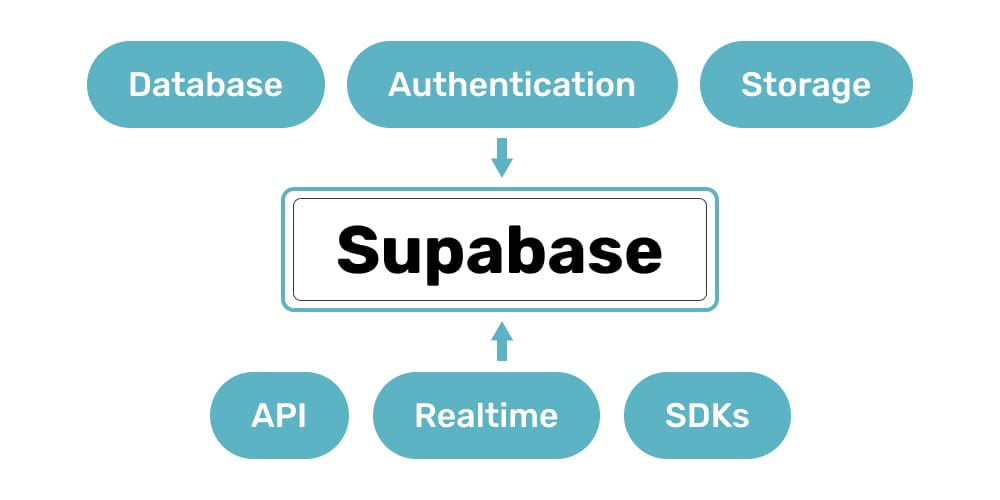
When to Choose Supabase | Image by Author
# Wrapping Up
Neither Firebase nor Supabase is objectively "better." The right choice depends on your app's requirements and your comfort zone.
- Choose Firebase if you want the fastest path to a real-time minimum viable product (MVP) and are comfortable with NoSQL data modeling.
- Choose Supabase if you come from a SQL background, are building apps with complex data relationships, or value the freedom of open-source software.
Both platforms let you skip server management and get your app in front of users faster. The best way to decide? Try a simple prototype on both and see which workflow feels more natural.
// Reviewing References
- Firebase Official Documentation
- Supabase Official Documentation
- PostgreSQL Official Documentation
- Google Cloud Firestore Documentation
- AWS RDS for PostgreSQL
Shittu Olumide is a software engineer and technical writer passionate about leveraging cutting-edge technologies to craft compelling narratives, with a keen eye for detail and a knack for simplifying complex concepts. You can also find Shittu on Twitter.