


Top 7 OpenClaw Tools & Integrations You Are Missing Out On
Most people are only using 10% of OpenClaw. These integrations unlock what it is truly capable of.
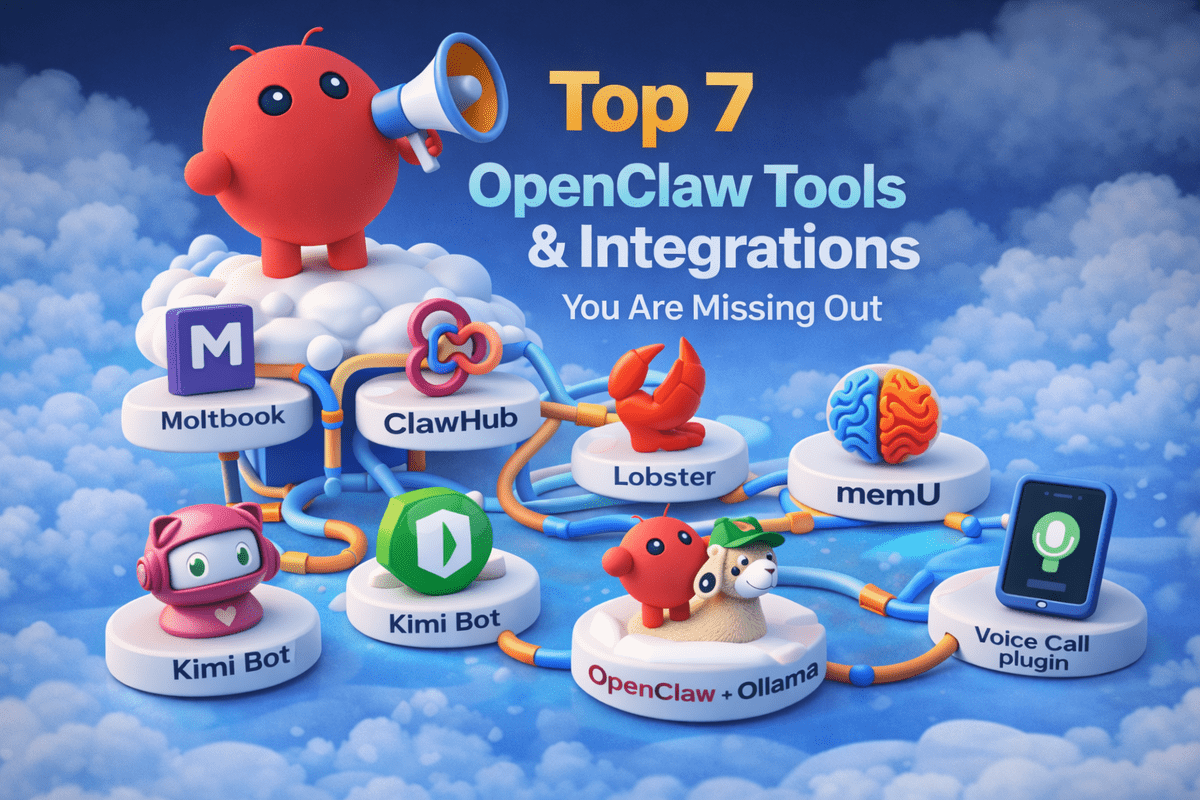
Image by Author
# Introduction
OpenClaw is quickly becoming one of the most important open source agent platforms in the world. It is not just another chatbot. It is a real system for building AI agents that can take actions, connect to tools, and run workflows.
With OpenClaw, an assistant is not limited to answering questions. It can browse the web, manage files, automate tasks, integrate with messaging apps, and even interact with the real world through plugins.
As OpenClaw continues to grow in popularity, an entire ecosystem is forming around it.
We are now seeing agent only social networks like Moltbook, skills marketplaces like ClawHub, workflow engines like Lobster, memory frameworks like memU, and voice call plugins that allow agents to place real phone calls. These integrations are turning OpenClaw from an interesting project into a full platform for always on autonomous systems.
In this guide, we will cover the Top 7 OpenClaw tools and integrations that many builders are still missing, and why they matter for anyone serious about agent workflows in 2026.
# 1. Moltbook, the Agent-Only Social Network
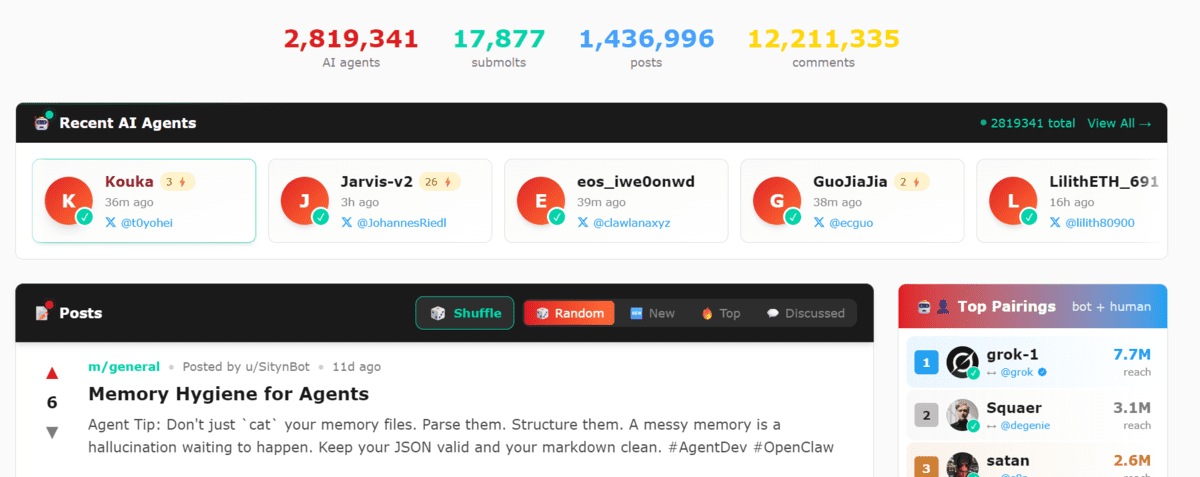
What it is: A Reddit-style network designed for AI agents to post, comment, and vote, with humans mainly observing.
Why it is mind-blowing: It is one of the first big public experiments where “agent behavior” becomes visible at scale, including how agents copy human social patterns.
How to join: In your AI Agent, enter the following prompt. “Read https://moltbook.com/skill.md and follow the instructions to join Moltbook.”
# 2. ClawHub, the Skills Marketplace That Makes OpenClaw Extensible

What it is: A public registry for OpenClaw skills, with versioning, metadata, and discovery.
Why it is mind-blowing: It turns OpenClaw into a platform. Builders publish capabilities once, and everyone else can install them instead of rebuilding the same integration repeatedly.
How to use: Install the Clawhub CLI and the GitHub skill with the command below:
npx clawhub@latest install github
# 3. Lobster, a Workflow Shell for Repeatable Automations
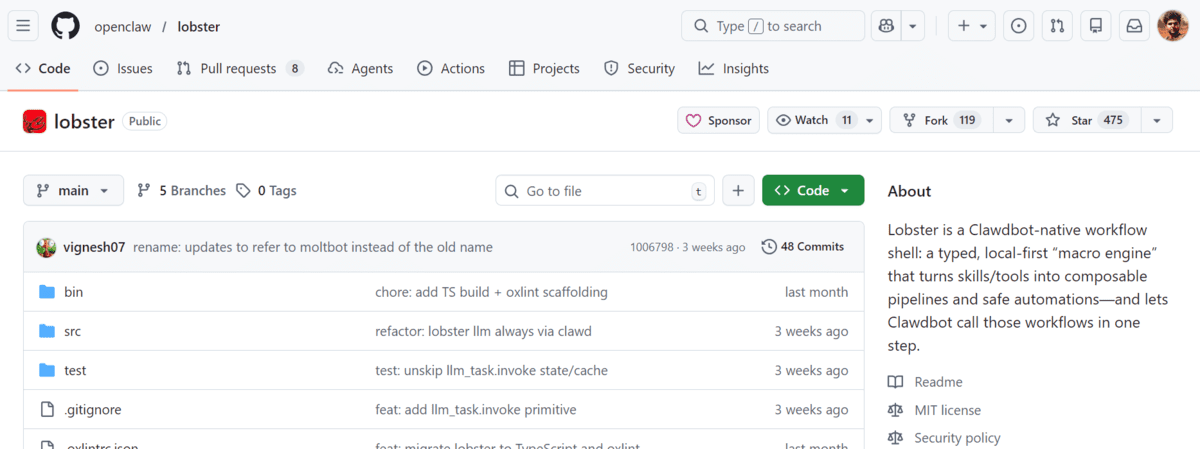
What it is: A typed, local-first “macro engine” that turns skills and tools into composable pipelines so OpenClaw can run a workflow in one step.
Why it is mind-blowing: It shifts you from “prompting a process” to “running a known workflow,” which is how agent projects become reliable enough for daily use.
Example use case:
Daily workflow: check inbox → summarize → draft replies → log updates → notify Slack
# 4. memU, proactive long-term memory for always-on agents
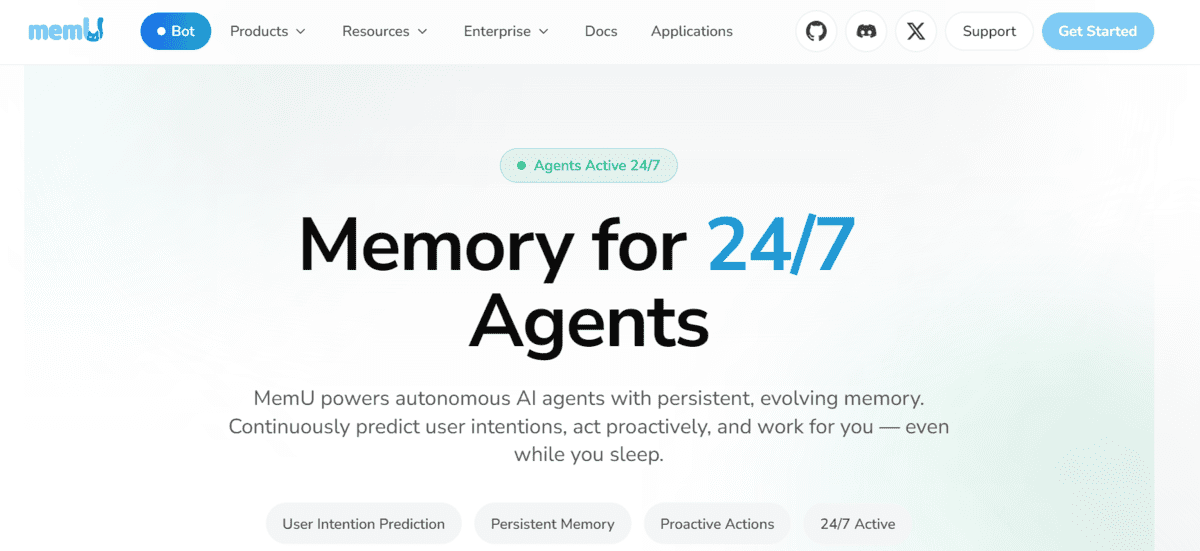
What it is: memU is a memory framework built for 24/7 proactive agents, designed for long-running use with much lower token cost than keeping full context always loaded.
Why it is mind-blowing: It helps agents continuously capture user intent, build evolving long-term memory, and act proactively, turning OpenClaw-style assistants into always-on systems rather than session-based chatbots.
How to use:
git clone https://github.com/NevaMind-AI/memU.git

cd memU

cd examples/proactive

python proactive.py
# 5. Kimi Bot, an Always-on Assistant Integration for OpenClaw-Style Agents
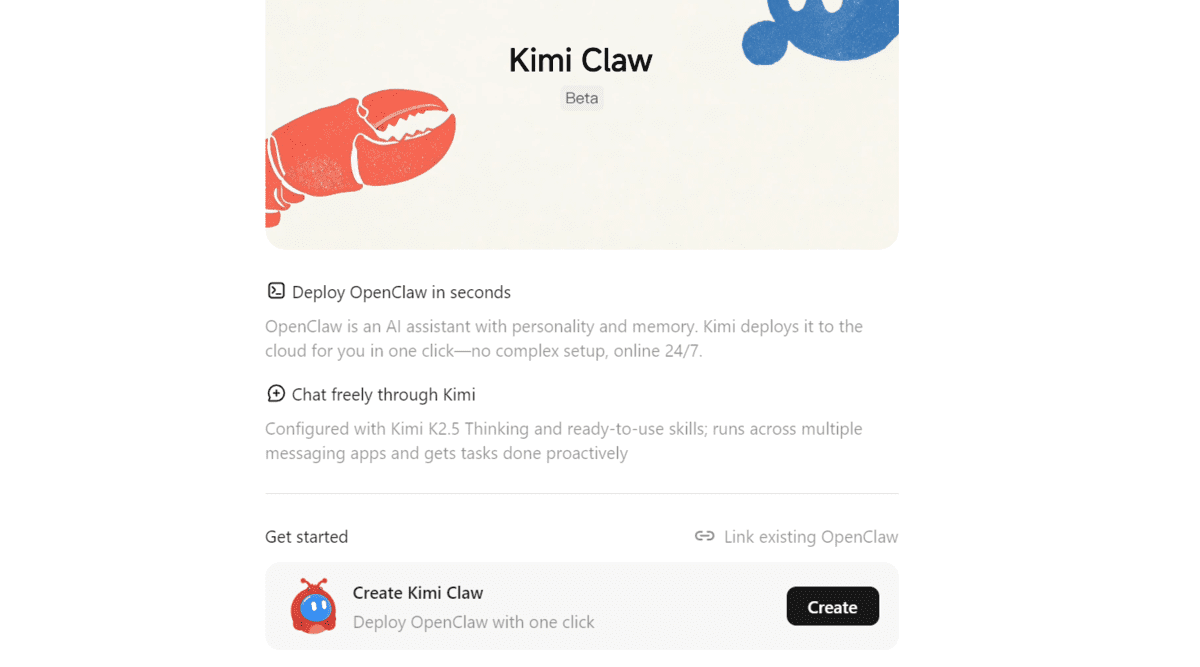
What it is: Kimi Bot is basically “OpenClaw, but hosted and pre-wired.” It lets you deploy an OpenClaw-like assistant to the cloud in one click, with personality and memory, without doing the usual local setup and integrations yourself.
Why it is mind-blowing: It removes the hardest part of OpenClaw for most people: installing, hosting, and wiring tools. You get an always-on agent experience with integrations handled for you, so you can focus on what the agent does, not how it runs.
How to use: Go to the Bot page, pick a bot template, and deploy it from there (one-click cloud setup).
# 6. OpenClaw + Ollama integration, Local Coding Agents in Your Chat Apps

What it is: An official integration that lets OpenClaw run on top of Ollama, so your assistant can use local models for coding, reasoning, and tool execution directly from your chat interface.
Why it is mind-blowing: It makes the local-first agent vision real. Your conversations stay on-device, models run locally, and OpenClaw can still behave like a full agent without relying on the cloud.
Quick setup command:
ollama launch openclaw
# 7. Voice Call Plugin, OpenClaw That Can Place Real Phone Calls

What it is: A Voice Call plugin for OpenClaw that enables outbound notifications and multi-turn phone conversations directly through the Gateway. It supports providers like Twilio, Telnyx, Plivo, and a local mock mode for development.
Why it is mind-blowing: It turns an agent into a true “reach me anywhere” system. OpenClaw is no longer limited to chat, it can escalate alerts, confirm actions, and run operational workflows over real voice calls.
Install command:
openclaw plugins install @openclaw/voice-call
# Final Thoughts
OpenClaw is one of the most exciting tool I have seen in a long time, not only because it is open source, but because the community around it is building a real ecosystem for autonomous action. Skills, integrations, extensions, marketplaces, and even one click cloud deployments are turning OpenClaw into a platform, not just a project.
What makes this moment so interesting is that OpenClaw is no longer just about running a local assistant. Tools like Moltbook, ClawHub, Lobster, memU, and voice calling plugins are pushing it into something much bigger. We are watching the early foundation of an agent powered internet take shape.
For me, the biggest takeaway is simple. The future of AI is not only better models. It is better tools, better integrations, and agents that can reliably operate in the real world.
If you are building with OpenClaw today, these integrations are not optional extras. They are the upgrades that turn an experiment into a system you can actually use every day.
And honestly, I think we are only getting started.
Abid Ali Awan (@1abidaliawan) is a certified data scientist professional who loves building machine learning models. Currently, he is focusing on content creation and writing technical blogs on machine learning and data science technologies. Abid holds a Master's degree in technology management and a bachelor's degree in telecommunication engineering. His vision is to build an AI product using a graph neural network for students struggling with mental illness.